


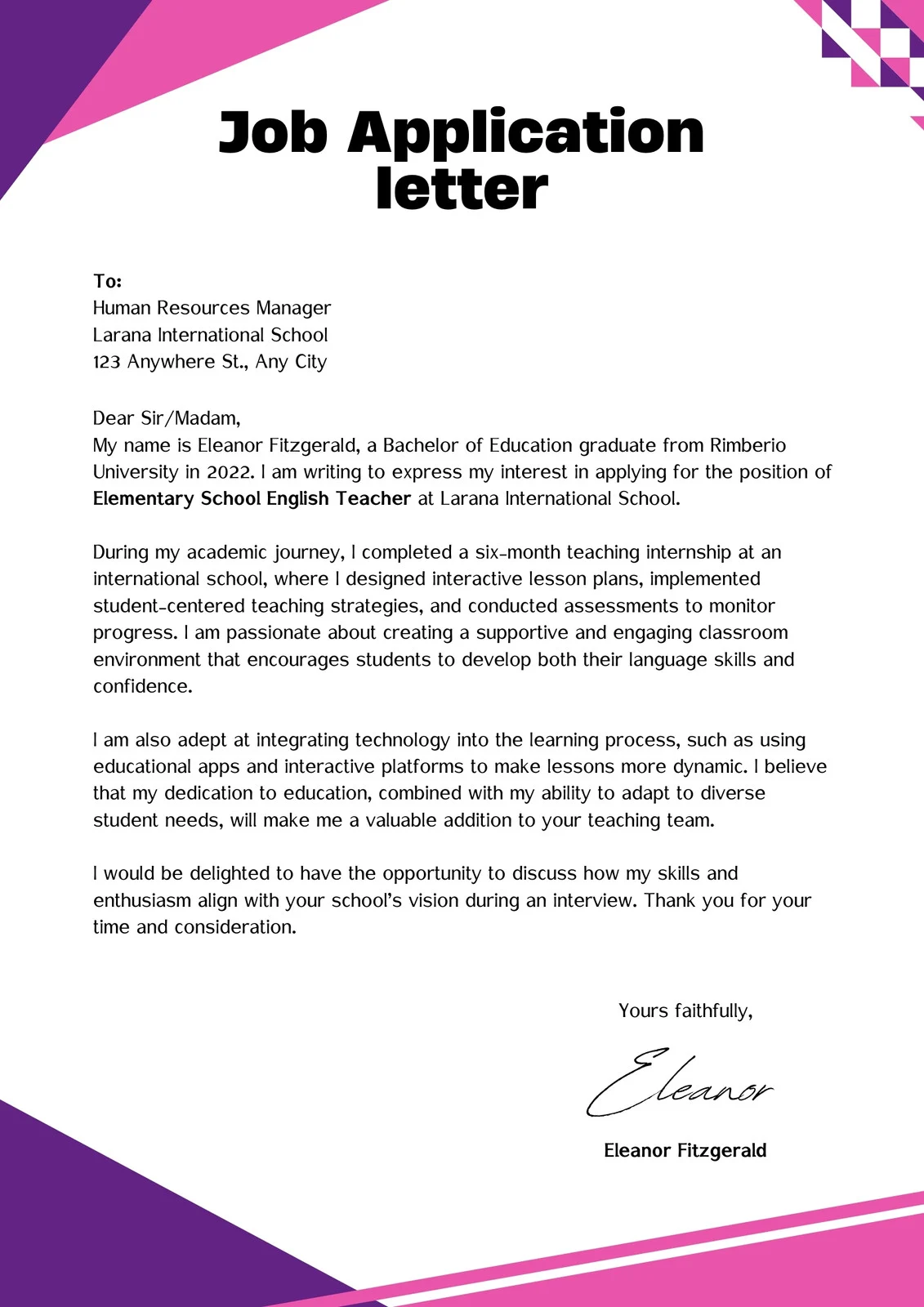
How to Write an Internship Application Letter in Uganda. Your internship application letter is often the very first thing an employer reads about you. Before they look at your CV, before they invite you for an interview, and long before they meet you in person, they form an opinion based on a single page. In Uganda, where HR offices at banks, ministries, hotels, and tour companies receive stacks of letters every internship season, a well-written application letter can be the difference between a placement offer and silence.
The good news is that writing a strong internship application letter is not difficult once you understand what employers expect. At Uganda Internship, we help thousands of students connect with host organisations, and we see what works and what does not. In this guide, you will learn the correct format, what to include in each paragraph, the mistakes to avoid, and how to tailor your letter for different sectors. We also share free sample letters you can adapt for your own application.
What Is an Internship Application Letter?
An internship application letter is a formal letter that a student or recent graduate writes to an organisation to request a placement for practical training. It introduces you, explains your course and institution, states the period you are available, and shows why you want to train with that specific organisation.
In Uganda, the application letter is usually submitted together with your CV, a university introduction or recommendation letter, and sometimes your academic transcript. While some organisations now accept online applications through platforms like ours, most still expect a formal letter, whether printed and delivered by hand or attached to an email. Think of the letter as your personal sales pitch: short, polite, and focused on why you are a good fit.
Why Your Application Letter Matters So Much
Many students spend hours on their CV and then write their application letter in five minutes. This is a costly mistake. Your CV lists facts, but your letter shows your communication skills, your attitude, and your genuine interest in the organisation. A careless letter with spelling errors, the wrong company name, or vague statements tells the employer that you will probably be careless at work too.
On the other hand, a clear, specific, and well-presented letter signals professionalism. It tells the HR officer that you have researched the organisation, that you understand what you want to learn, and that you will represent them well. In a competitive season, that impression can move your file to the top of the pile.
Before You Write: Research the Organisation
Every strong application letter begins with research. Before you start writing, visit the organisation’s official website, read its “About Us” page, and understand its products, services, or mandate. Note one or two specific things you can mention in your letter, such as a programme, a value, a destination, or a recent achievement.
For example, if you are applying to a tour operator such as Kenlink Tours, you might note that it has offered customised tours across Uganda, Rwanda, Kenya, Tanzania, and Zanzibar since 2015. If you are applying to Pick and Transfer Safaris, you could mention its focus on affordable gorilla trekking and responsible tourism. Students targeting technology firms like Kenlink Technologies can refer to its work in digital transformation and cloud migration. You can find profiles of many host employers in our Internship Companies directory, which is a great starting point for this research.
The Correct Format of an Internship Application Letter
Most Ugandan organisations expect a formal business letter format. Follow this structure:
- Your address and contacts: Your name, postal or physical address, phone number, and professional email address, placed at the top right or top left.
- Date: Write the full date, for example 9th October 2026.
- Recipient’s address: The title and address of the person responsible for placements, such as “The Human Resource Manager” followed by the organisation’s name and address.
- Salutation: “Dear Sir/Madam,” or, if you know the name, “Dear Mr. Okello,” or “Dear Ms. Namatovu,”.
- Subject line (RE): A short, bold or underlined line such as “RE: APPLICATION FOR INTERNSHIP PLACEMENT”.
- Body: Three to four short paragraphs: introduction, motivation, skills, and closing.
- Complimentary close: “Yours faithfully,” if you used “Dear Sir/Madam”, or “Yours sincerely,” if you used the person’s name.
- Signature and name: Sign above your typed full name.
- Enclosures: A list of documents attached, such as CV, introduction letter, and transcript.
Keep the entire letter to one page. Use a clean, professional font such as Times New Roman, Arial, or Calibri at size 11 or 12, with consistent spacing and margins.
Paragraph 1: A Clear and Confident Introduction
Your first paragraph should immediately tell the reader who you are and what you want. Include your full name, course, year of study, institution, and the exact internship period you are seeking. Avoid long, flowery openings.
A good example: “I am a third-year student pursuing a Bachelor of Tourism and Hospitality Management at Kyambogo University. I am writing to apply for an internship placement in your organisation for the period of June to August 2026, as part of my programme’s industrial training requirement.”
This tells the HR officer everything they need in two sentences. They know your field, your level, your institution, and your availability.
Paragraph 2: Why You Chose This Organisation
This is where most letters fail, and where yours can stand out. Explain why you want to train with this particular organisation, using the research you did earlier. Show that you understand what it does and connect it to your studies or career goals.
For example: “I am particularly drawn to your company because of its commitment to personalised and responsible safari experiences. Having studied sustainable tourism and destination management, I am eager to learn how these principles are applied in planning and delivering real tours across East Africa.”
Avoid generic statements such as “Your company is the best in Uganda” or “I have always admired your organisation.” Specific details are far more convincing than general praise.
Paragraph 3: What You Can Offer
Employers want interns who can contribute, not only learn. In the third paragraph, briefly highlight two or three skills or experiences that make you a useful addition to the team. These may come from your coursework, volunteering, student leadership, part-time work, or personal projects.
For example: “During my studies, I have developed strong skills in customer care, itinerary planning, and Microsoft Office. I also served as treasurer of the Tourism Students’ Association, where I managed records and coordinated a field trip for forty students. I am confident that these skills will allow me to support your team while learning from experienced professionals.”
Keep this paragraph focused and honest. Do not list every skill you have; choose the ones most relevant to the organisation.
Paragraph 4: A Polite and Professional Closing
End your letter by thanking the reader, expressing your hope for a positive response, and mentioning that your documents are attached. Provide your phone number and email address again so they can contact you easily.
For example: “Attached are my curriculum vitae, university introduction letter, and academic transcript for your consideration. I would be grateful for the opportunity to discuss my application further. I can be reached on 07XX XXX XXX or at firstname.lastname@email.com. Thank you for considering my application.”
Sample Internship Application Letter (General)
Below is a general sample you can adapt. Replace everything in square brackets with your own details.
[Your Full Name]
[Your Address]
[Phone Number] | [Email Address]
[Date]
The Human Resource Manager
[Organisation Name]
[Organisation Address]
Dear Sir/Madam,
RE: APPLICATION FOR INTERNSHIP PLACEMENT
I am a [year] student pursuing a [course] at [institution]. I am writing to request an internship placement in your organisation from [start date] to [end date], as part of my programme’s practical training requirement.
I am especially interested in [organisation name] because of [specific reason, such as its services, mandate, or values]. This aligns closely with my studies in [relevant subjects], and I am eager to gain practical experience in [department or area].
Through my studies and [activity, such as volunteering or student leadership], I have developed skills in [skill 1], [skill 2], and [skill 3]. I am hardworking, punctual, and eager to learn, and I believe I can make a positive contribution to your team.
Please find attached my CV, university introduction letter, and academic transcript. I would be grateful for the opportunity to train with your organisation. I can be reached on [phone] or [email]. Thank you for your time and consideration.
Yours faithfully,
[Signature]
[Your Full Name]
Enclosures: CV, Introduction Letter, Academic Transcript
Sample Letter for a Government Internship
Government institutions are formal, so your letter should be addressed to the correct office and follow their instructions exactly. For example, the Ministry of Gender, Labour and Social Development receives placement applications through its Permanent Secretary, as explained in our Internship Opportunities at the Ministry of Labour listing.
A short sample opening for a government placement:
“The Permanent Secretary, Ministry of Gender, Labour and Social Development, P.O. Box [number], Kampala. Dear Sir/Madam, RE: APPLICATION FOR INTERNSHIP PLACEMENT. I am a third-year student of Social Work and Social Administration at [university], seeking a two-month internship placement in the Ministry, as required by my programme…”
Other public bodies such as the Uganda Revenue Authority may require you to apply through an online portal, so always read the instructions on listings like Internships at URA and the Internship at UWA before writing. For the Uganda Wildlife Authority, mention your interest in conservation, protected area management, or tourism operations. Explore more public-sector openings in our government organisation internships category.
Tailoring Your Letter for Different Sectors
A letter that works for a bank will not work equally well for a safari company. Adjust your emphasis depending on the sector:
- Tourism and travel: Show passion for Uganda’s destinations, knowledge of national parks, and customer care skills. Companies like Menlyn Tours design tailored East African journeys, so highlight any experience with travel planning or guiding. Browse tourism internships and the Tours and Travel Internship.
- Hospitality: Emphasise grooming, patience, teamwork, and service. Hotels such as Ikoro Hotel Kisoro, located at the foot of the Virunga Mountains, value genuine hospitality, so show warmth and attention to detail.
- ICT: Mention specific programming languages, software, networking, or design tools you have used, and include a link to your portfolio or GitHub. See the current ICT Internship.
- Banking and finance: Highlight accuracy, integrity, numeracy, and customer relationship skills. Banks like NCBA value interns who understand confidentiality and attention to detail. Browse business administration internships.
- NGOs and community work: Show empathy, community engagement experience, and understanding of development issues. See Internships with REACH in Uganda and our NGO internships.
- Education and training: Institutions like KCI Institute focus on practical, career-oriented training, so mention any tutoring, mentoring, or administrative experience.
Application Letters for Fresh Graduates
If you have already completed your studies, your letter should be adjusted slightly. Instead of referring to industrial training requirements, explain that you are a recent graduate seeking practical experience to build your career. Mention your degree or diploma, your graduation year, and your final-year project or research if it relates to the organisation’s work.
Fresh graduates should also emphasise readiness to contribute quickly and willingness to commit for a defined period, such as three or six months. Employers appreciate graduates who are clear about their goals, so mention the kind of role you hope to grow into. Because you may not have a university introduction letter, attach your academic transcript, a copy of your certificate or provisional results, and recommendation letters from lecturers or previous supervisors instead.
Making Your Letter Look Professional on Paper
Presentation matters as much as content. Print your letter on clean white A4 paper using a good-quality printer, and avoid folding it too many times. Align your text neatly, keep margins of about 2.5 centimetres on all sides, and leave enough space for your signature. Use blue or black ink when signing. If you are delivering several documents, arrange them in the order listed in your enclosures and place them in a clear folder or a clean envelope labelled with the recipient’s title and the organisation’s name. A neat, well-presented application shows respect for the reader and reflects the care you will bring to your work.
Writing an Email Application for an Internship
Many organisations now accept applications by email. In this case, you can either attach your formal letter as a PDF or write a shorter version directly in the email body, with your full letter and documents attached.
Use a clear subject line such as “Application for Internship Placement – [Your Name], [Course]”. Start with a polite greeting, write two or three short paragraphs summarising your request, and list your attachments. Name your files professionally, for example “Sarah_Nakato_CV.pdf” rather than “document1.pdf”. Always use a professional email address based on your name, and check that all attachments open correctly before sending.
Common Mistakes to Avoid
Even capable students lose placements because of avoidable errors. Watch out for these:
- Wrong company name or addressee: Copying a letter and forgetting to change the organisation’s name is one of the fastest ways to be rejected.
- Spelling and grammar errors: Proofread carefully, use spell check, and ask a friend or lecturer to review your letter.
- Generic content: Letters that could be sent to any company show no genuine interest.
- Too long: Keep it to one page. HR officers have limited time.
- Informal language: Avoid slang, abbreviations like “u” or “pls”, and emojis.
- Begging or emotional appeals: Be confident and professional, not desperate.
- Missing contact details or attachments: Make it easy for the employer to reach you.
- Unprofessional email addresses: Use your name, not nicknames.
How to Submit Your Application Letter
Follow the organisation’s preferred submission method exactly. Some ask for hand-delivered letters at their reception or registry, others accept email applications, and many now use online platforms or portals. When delivering by hand, place your documents in a clean envelope or folder, dress smartly, and ask the receptionist to stamp or sign a copy as proof of receipt.
On Uganda Internship, you can apply directly through listings once you create your free account. Browse open positions on our Internships page or search the full internship job list. Keep a record of where and when you applied so that you can follow up at the right time.
Following Up After Sending Your Letter
If you do not hear back within one to two weeks, it is acceptable to follow up politely. Call the HR office or send a brief email, introduce yourself, mention the date you applied, and ask whether your application was received and whether any additional information is needed.
Keep your tone respectful and patient. One or two follow-ups are enough. If you are invited for an interview, prepare thoroughly using our guide on how to win an internship interview. It also helps to plan your budget early, and our article on how much an internship costs in Uganda explains what to expect.
A Quick Checklist Before You Send
Before submitting your internship application letter, confirm the following:
- The organisation’s name, address, and addressee are correct.
- Your course, institution, year, and internship dates are clearly stated.
- You have mentioned at least one specific reason for choosing this organisation.
- You have highlighted two or three relevant skills.
- The letter fits on one page and uses a professional font.
- There are no spelling or grammar errors.
- Your phone number and email address are included and correct.
- Your CV, introduction letter, and other required documents are attached.
- You have signed the letter.
For Employers: Attract Better Applications
If your organisation hosts interns, clear listings attract stronger applications. You can post an internship opportunity on Uganda Internship, browse our Candidates page, and explore our corporate packages. Our guide on how to get internship students shares practical advice for hosting interns successfully.
Frequently Asked Questions About Internship Application Letters in Uganda
How long should an internship application letter be? One page is ideal. Aim for three to four short paragraphs that clearly explain who you are, why you are applying, and what you can offer.
Who should I address my internship letter to? Address it to the person or office named in the listing. If no name is given, use “The Human Resource Manager” or the head of the relevant department. For ministries, the Permanent Secretary is often the correct addressee.
Should I write a new letter for every organisation? Yes. You can keep the same basic structure, but always change the organisation’s details and your reasons for applying.
Can I handwrite my internship application letter? Typed letters are preferred because they look more professional and are easier to read. Only handwrite if the organisation specifically requests it.
What documents should I attach to my application letter? Usually your CV, university introduction letter, and academic transcript. Some organisations also request copies of your national ID or student ID.
Is “Yours faithfully” or “Yours sincerely” correct? Use “Yours faithfully” when you start with “Dear Sir/Madam,” and “Yours sincerely” when you address the person by name.
How to Write an Internship Application Letter in Uganda Your Letter Opens the Door
Your internship application letter is a small document with a big job. It introduces you, shows your professionalism, and convinces an employer to give you a chance. By researching the organisation, following the correct format, writing specific and confident paragraphs, and checking every detail before sending, you dramatically improve your chances of securing a placement.
Start writing your letter today, then explore the latest opportunities on Uganda Internship. Learn more about Uganda Internship, or contact our team if you need help with your application. The right placement could be just one well-written letter away.